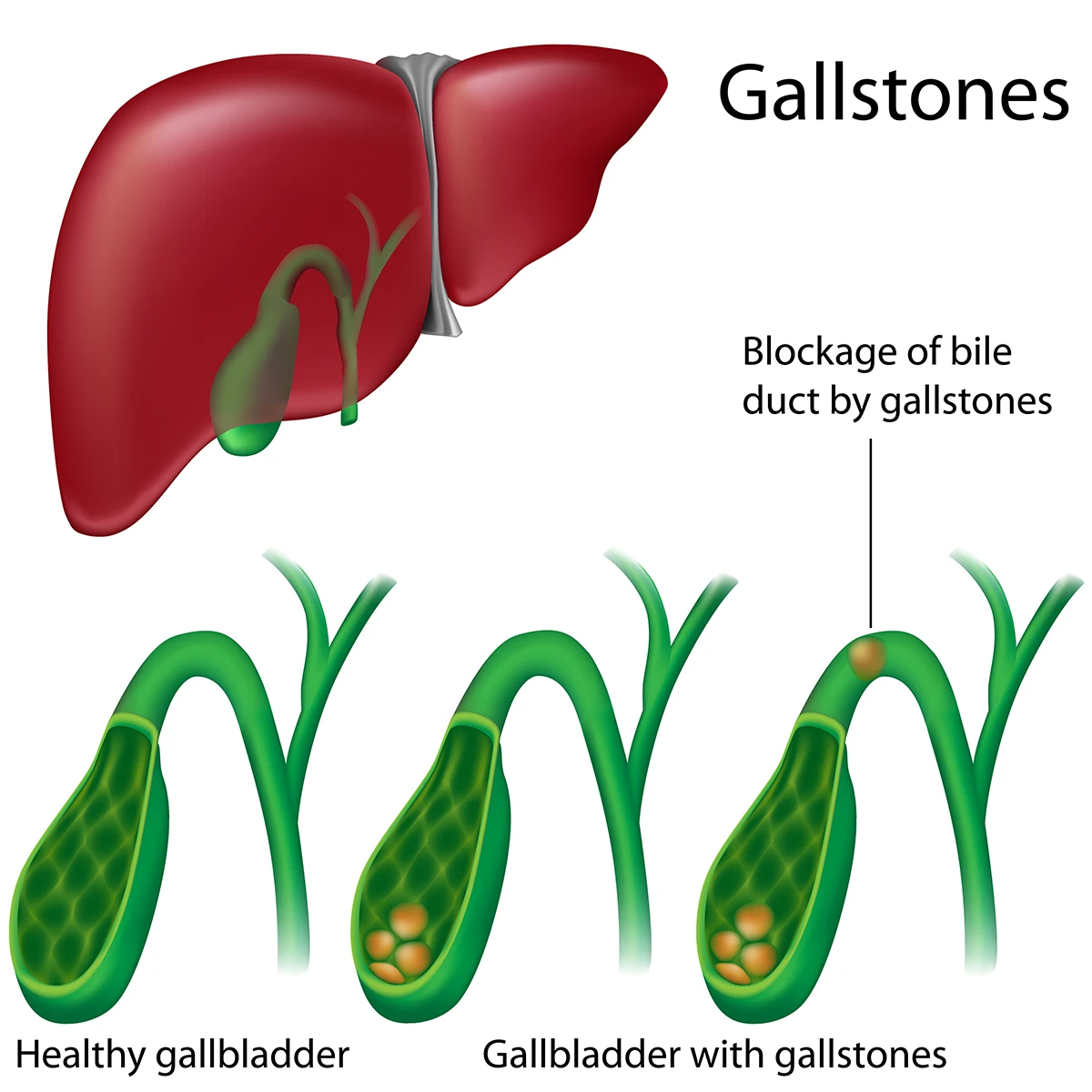
Gallstones symptoms
Small gallstones may not cause symptoms and are known as silent gallstones. But stones that block a bile duct may cause a gallbladder attack. The main symptom of a gallbladder attack is abdominal pain that:
- Is located in the upper right part of your abdomen under your rib cage
- Occurs after a heavy meal or at night
- Feels sharp or stabbing
If gallstones block a bile duct for more than a few hours, the pressure in your gallbladder increases. This pressure can damage your gallbladder, bile ducts or liver and requires immediate medical care. Signs of a severe gallbladder attack include:
- Abdominal pain that lasts more than two hours
- Fever or chills
- Jaundice (yellowing of the skin or whites of your eyes)
- Nausea and vomiting
- Tea-colored urine or pale stools
Gallstone types
The two types of gallstones are:
- Cholesterol stones: These arethe most common type. They are yellow-green and contain more than 50% cholesterol.
- Pigment stones: These stones are a dark color and contain bilirubin.
Gallstone diagnosis
Your doctor may diagnose gallstones by asking you about your symptoms and ordering tests. Tests for gallstones may include:
- Blood tests to check for signs of inflammation or infection in your gallbladder, liver or bile ducts
- Cholescintigraphy, an imaging test that uses a radioactive material to take pictures of your gallbladder and bile ducts
- Endoscopic retrograde cholangiopancreatography (ERCP), a procedure that uses endoscopy and X-rays to create images of your digestive tract
- Other imaging tests, such as ultrasound, CT scan or MRI, to view your gallbladder and surrounding organs
Gallstone risk factors
You may be more likely to develop gallstones if you:
- Are female
- Are over age 40
- Have a family history of gallstones
- Have Native American or Mexican American ethnicity
- Have obesity
- Lose weight quickly or diet frequently
Gallstone prevention
You can help prevent gallstones by:
- Avoiding rapid weight loss or crash diets
- Eating a diet rich in fiber and healthy fats, and reducing sugar and processed foods
- Working toward or maintaining a healthy weight through healthy eating and regular exercise